




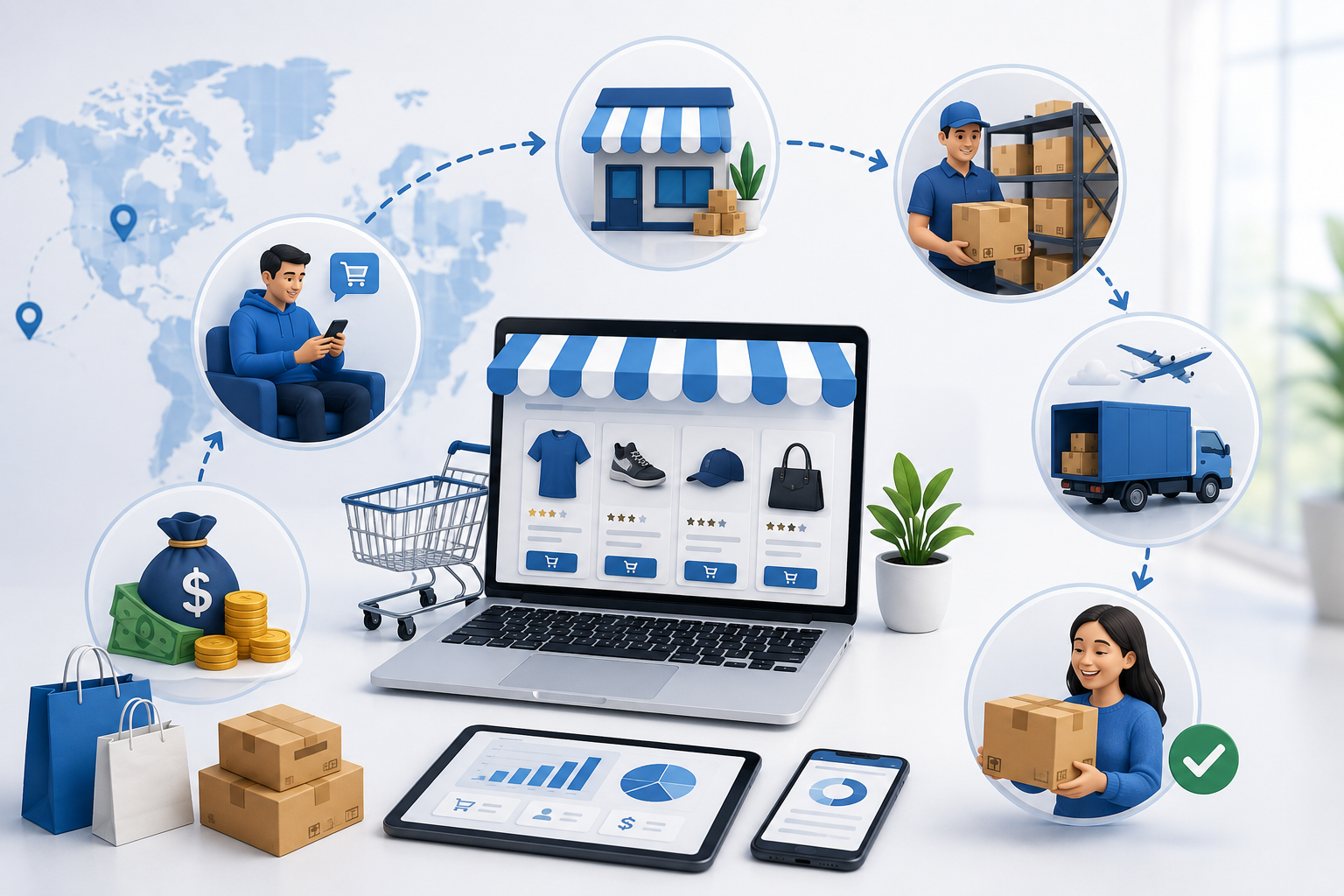
How to Start a Dropshipping Business: A Step-by-Step Guide
1. Choose a Product Niche
Start by deciding what type of products you want to sell.
A niche helps you focus your marketing and understand your target customers.
Popular categories can include:
Fashion and accessories
Home and kitchen
Beauty and personal care
Electronics accessories
Fitness products
Pet products
Office accessories
Lifestyle products
Don't choose a niche only because it appears popular. Research demand, competition, pricing, shipping requirements, and customer expectations before making a decision.

2. Research Products

After choosing a niche, find products that have potential.
Consider factors such as:
Selling price
Supplier price
Potential profit margin
Product demand
Competition
Product quality
Shipping time
Customer reviews
Return requirements
Availability
Instead of adding hundreds of random products, start with a smaller selection of products that match your target audience.
3. Find a Reliable Supplier

Your supplier plays a major role in your dropshipping business.
Before working with a supplier, investigate:
Product quality
Inventory availability
Shipping options
Processing times
Tracking information
Return policies
Communication
Pricing
A supplier that provides good products but consistently ships late can still create problems for your business.
4. Build Your Online Store
You need a place where customers can discover and purchase your products.
Depending on your requirements, you can use platforms such as WooCommerce or Shopify.
Your store should include:
Professional product pages
Clear product descriptions
High-quality images
Pricing
Shipping information
Return policy
Privacy policy
Terms and conditions
Contact information
Secure checkout
Your store should also be mobile-friendly because many online shoppers browse and purchase using smartphones.
5. Import Products
Once your store and supplier are ready, you can add products to your catalog.
A dropshipping platform such as Nacify can help simplify product sourcing and importing, depending on the available integrations and supplier catalog.
When importing products, don't simply copy supplier descriptions without reviewing them.
Improve your product pages by:
Writing original descriptions
Highlighting customer benefits
Using clear product titles
Optimizing images
Adding useful specifications
Answering common customer questions
6. Set Your Pricing Strategy
Your selling price needs to cover more than the supplier's product cost.
Consider:
Product Cost + Shipping + Payment Fees + Marketing Costs + Other Expenses + Desired Profit = Selling Price
For example:
Product cost: $15
Shipping: $4
Payment and other costs: $2
Marketing allocation: $2
Target profit: $7
Potential selling price: $30
Your actual pricing strategy will depend on your market, competition, costs, and business model.
7. Create a Marketing Strategy
Adding products to your store doesn't automatically generate sales.
You need to bring potential customers to your website.
Common marketing channels include:
Search Engine Optimization
Create useful content and optimize product pages so customers can discover your store through search engines.
Social Media
Use platforms such as Instagram, Facebook, TikTok, Pinterest, and YouTube to showcase products and build an audience.
Paid Advertising
You can use advertising platforms to reach specific audiences, but carefully monitor your advertising costs and return on investment.
Content Marketing
Create guides, comparisons, tutorials, videos, and other useful content related to your products.
8. Manage Customer Orders
Once customers begin placing orders, you need an organized process for:
Receiving orders
Sending orders to suppliers
Processing payments
Tracking shipments
Handling customer questions
Managing returns and refunds
Automation can reduce repetitive work as your order volume increases.
9. Monitor Your Performance
Don't rely only on sales numbers.
Track metrics such as:
Conversion rate
Average order value
Customer acquisition cost
Profit margin
Return rate
Product performance
Traffic sources
Repeat customers
Use these insights to identify products and marketing channels that perform best.
10. Scale Your Business
Once you've identified profitable products and reliable suppliers, you can gradually expand.
Scaling may involve:
Adding complementary products
Expanding into new markets
Increasing advertising
Improving your website
Building your brand
Automating repetitive tasks
Developing better customer support
Working with additional suppliers
Avoid scaling too quickly. Make sure your fulfillment and customer service processes can handle increased demand.
Common Dropshipping Mistakes to Avoid
New sellers often make several avoidable mistakes.
Choosing Products Without Research
A product may look attractive but have little demand or extremely high competition.
Competing Only on Price
Trying to become the cheapest seller can quickly reduce your profit margin.
Ignoring Shipping Times
Customers expect clear and realistic delivery information.
Using Poor Product Content
Generic descriptions and low-quality images can make a store look unprofessional.
Adding Too Many Products
A smaller, well-organized catalog can be easier to market than thousands of unrelated products.
Final Thoughts
Starting a dropshipping business requires more than finding products and uploading them to a website. You need a complete strategy covering product research, supplier selection, pricing, marketing, fulfillment, and customer service.
Start small, test your ideas, analyze your results, and improve your store based on real customer data.
With the right products, reliable suppliers, and appropriate tools, dropshipping can provide a practical way to build an online retail business without maintaining a traditional inventory operation.


